Liverpool is growing — and growing fast. New homes, new apartments, and new residents are reshaping the LGA at a pace that brings both opportunity and challenge. But for many in our community, one challenge stands out above the rest: the persistent, frustrating, and frankly unacceptable problem of illegal dumping.
The Liverpool Waste Committee exists to tackle this head on. At its meeting of 10 June 2026, members came together not simply to talk about the problem — but to drive real, lasting solutions that reflect the standards our community deserves.

Who Was in the Room?
The meeting was chaired by LCIT elected Councillor, Deputy Mayor of Liverpool City Council Mr Peter Harle.
Illegal dumping is not just a Council problem — it is a shared responsibility. Solving it requires a community response. That means bringing together elected members, Council staff, industry partners, and everyday residents who care about the places they call home.
The Committee has been clear that having the right people in the room makes a real difference. The stronger the attendance, the stronger the outcomes — and the Committee is committed to ensuring these meetings are a genuine forum for the whole community.
There is also a genuine desire to hear directly from the people on the front line — the workers who collect our rubbish every single day and understand the challenges of this work better than anyone. Their insights and experiences could prove invaluable in shaping practical, workable solutions.

$2 Million Worth of Eyes — But Are They Working?
One of the sharper discussions of the evening centred on Liverpool Council’s significant investment in CCTV and surveillance infrastructure to combat illegal dumping. Cameras have been deployed at known dumping hotspots across the LGA, supported by concrete barriers and active monitoring.
It is a substantial financial commitment — and the Committee wants evidence it is delivering. Members called for a formal report on the number of fines issued and successful prosecutions resulting directly from the camera network. Under NSW legislation, individuals caught illegally dumping face on-the-spot fines of up to $8,000, with higher penalties available through the courts for serious or repeat offenders.
The cameras are in place. The laws exist. What the Committee does not yet have — and is now formally seeking — is confirmation that the enforcement machinery is converting that infrastructure into real outcomes. Until that data is on the table, the question of whether the investment is working remains genuinely open.
The Bulk Waste Backlog
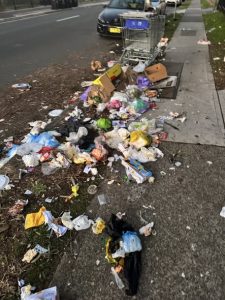
A recurring frustration raised at the meeting was the 4 to 6 week wait time for bulk waste pickups. For residents attempting to do the right thing, a wait of over a month is a significant disincentive — and the Committee is acutely aware of the perverse dynamic this creates.
When legitimate disposal is slow or inconvenient, illegal dumping becomes the path of least resistance for some residents. The bulk waste backlog is therefore not simply an operational issue — it is directly connected to the LGA’s broader dumping problem, and the Committee is treating it as such.
Compounding the delays are union-related weight restrictions on waste collection vehicles, which have affected service delivery schedules. The Committee is seeking greater clarity on how these restrictions are being managed operationally, and what steps Council is taking to ensure residents are not left waiting unreasonably. Worker safety is a legitimate consideration — but so is a functioning waste service, and at present the balance between the two remains unclear.
Illegal Dumping Hotspots & Reporting
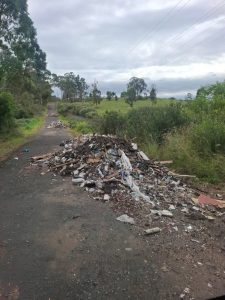
The Committee spent time reviewing known illegal dumping hotspots across the LGA, with members sharing local knowledge and observations from their own communities. This on-the-ground intelligence remains one of the Committee’s most valuable assets — residents and community members often know where the problem areas are long before formal data catches up.
Reporting illegal dumping remains a key tool in the fight against it. Residents are encouraged to report incidents through Council’s waste reporting channels, and the Committee is keen to ensure those pathways are as simple and accessible as possible. If reporting is complicated or time-consuming, fewer people will bother — and that is a gap the Committee is actively looking to close.
The Committee also discussed the role of signage at known hotspots — clear, visible warnings that surveillance is in place and that penalties apply. The evidence suggests that well-placed signage does act as a deterrent, and the Committee is supportive of ensuring signage is consistent, current, and prominently displayed across the LGA.
Apartments, Strata & the Real Estate Forum
As Liverpool continues to grow and densify, the challenge of waste management in and around multi-unit dwellings has become increasingly pressing. Illegal dumping is particularly prevalent near apartment complexes — often concentrated around bin areas, car parks, and building entrances — and the Committee is determined to address it at the source.
One of the more innovative proposals to emerge from the meeting was the establishment of a Real Estate Agents and Strata Managers Forum. The idea is straightforward but potentially powerful: engage the people who manage properties and oversee tenant transitions at precisely the moment when dumping risk is highest — when someone is moving in or moving out.
Strata managers, in particular, have real authority to enforce waste-related by-laws within their buildings. By equipping them with the right information, tools, and Council support, the Committee believes they can become genuine partners in reducing dumping rather than simply bystanders to it. The Forum is still in its early stages, but the Committee sees it as a meaningful force multiplier — extending the reach of waste education and compliance well beyond what Council can achieve on its own.
Looking Ahead
The Liverpool Waste Committee left its June meeting with a clear sense of purpose and a growing list of actions to pursue. The challenges are real — long wait times, enforcement gaps, rapid densification, and the persistent frustration of illegal dumping in communities that deserve better. But so too is the commitment to addressing them.
This is a Committee that is asking hard questions, pushing for accountability, and refusing to accept the status quo. It is not enough to simply clean up the mess — the goal is to understand why it is happening and to build systems that prevent it from happening in the first place.
Liverpool is growing. Its waste management services and community standards must grow with it. The next meeting will be an important opportunity to advance the work begun here — and the Committee looks forward to having the right people around the table to make that happen.