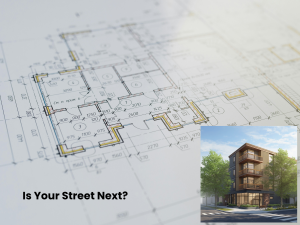
Planning decisions shape what our streets look like for a generation. Once a building goes up, the neighbourhood changes forever.
Planning decisions are not paperwork. They are not something that happens in a council chamber far removed from your life. They are the decisions that shape what type of building gets built next door, what your street looks like in a decade, and whether the neighbourhood you chose to raise your family in still feels like home.
For most of us, our house is the single biggest thing we will ever work for. It is not just bricks and mortar — it is security, it is pride, it is the future. So when governments start quietly rewriting the rules around who gets a say on what gets built nearby, that is not a bureaucratic footnote. That is something worth paying close attention to.
As the Liverpool Community Independents Team, we are paying very close attention — because what is unfolding across New South Wales concerns us deeply. And closer to home, right here in Liverpool, it concerns us even more after hearing a number of residents come to Council to speak about planning decisions in recent weeks.
The State Government’s Plan
The NSW Government’s draft Statewide Community Participation Plan was released in April 2026. It has been dressed up as a sensible, modern reform — a way to bring consistency to how communities are consulted about development across the state.[1]
We genuinely wish that were true.
What the draft plan actually does, in far too many cases, is quietly remove the community from the conversation altogether. Under the proposed rules, residents would have no opportunity whatsoever to comment on a wide range of developments — as long as those developments tick the right boxes on a planning checklist.[2]
- Shop-top housing
- Group homes
- Mid-rise residential apartments
- Changes of use to commercial premises
Under the draft CPP, residents may only find out about these developments when a notice appears advising that construction will start within a week.[3]
Think about what that means for your street. A four-storey apartment block could go up next door to your home, and nobody would be required to tell you a thing about it — not until the builder shows up with a notice saying work starts next week.
That is not consultation. That is not community participation. That is the appearance of process with none of the substance.
For bigger developments — function centres, clubs, pubs, places of worship — the minimum time residents have to respond would be cut from 21 days down to 14. A full week stripped away. A week that many families genuinely need to get their heads around a complex proposal, talk to their neighbours, take some advice, and put together a submission that actually means something. Gone. And councils would no longer have the power to extend that window, even when they know a particular development is going to hit their community hard.[2]
The formal exhibition period closed on 3 June 2026. The window to lodge a response has passed. But this conversation is far from over.
-
April 2026NSW Government releases draft Statewide Community Participation Plan
-
21 May 2026Mayor Frank Carbone publicly calls it a “non-participation plan” and commits to a formal submission
-
3 June 2026Submission deadline closes — Liverpool Council staff lodge a response without prior elected member endorsement
-
5 June 2026Liverpool Governance Committee meets — after the deadline, despite the meeting being scheduled in advance
-
17 June 2026Liverpool Ordinary Council Meeting — elected members asked to endorse a submission already sent two weeks prior
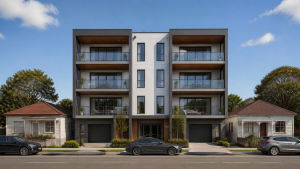
Communities across NSW raised serious concerns during the exhibition period. The submission window closed 3 June 2026 — but advocacy must continue.
Frank Carbone Speaks Up for Fairfield — Liverpool Must Do the Same
We want to acknowledge someone who has handled this with real backbone — Fairfield City Mayor Frank Carbone.
Frank is an independent, just as our team are. Neither of us carries a major party banner. Neither of us takes cues from Liberal or Labor head offices. We were elected by the people who live in our communities, and that is who we answer to — nobody else. In a political landscape that can sometimes feel like it is all about the party, that kind of independence matters. It means that when we speak up, it is because we genuinely believe something needs to be said — not because someone told us to say it.
On this issue, Mayor Carbone has been direct and steadfast. He called the draft plan exactly what it is:[3]
This isn’t a community participation plan, it’s a non-participation plan. The State Government is effectively taking away your right to speak up and to express your concerns.
— Mayor Frank Carbone, Fairfield City Council
Mayor Carbone made the point that communities like Fairfield — diverse, hardworking, full of families who have poured everything into their homes — are the ones who will feel these changes most sharply. People who may be navigating a language barrier, who need a little more time to understand what a development application actually means for them, and who depend on their council to genuinely go in to bat for them. These are the people being quietly edged out of the process.[2]
Council is currently able to ensure residents are informed and given time to respond, but under these new rules we would be prohibited from doing so. That is simply unacceptable.
— Mayor Frank Carbone, Fairfield City Council
Liverpool is not so different from Fairfield. We are diverse. We have families for whom home is everything. We have residents who deserve far better than a seven-day construction notice as their sole interaction with the planning system.
Our own Deputy Mayor, Cr Peter Harle, has been equally direct on this issue:
Liverpool residents deserve a genuine seat at the table when decisions are made about their streets and their neighbourhoods. Removing that right — or quietly shrinking it — is not reform. It is a step backwards for democracy at the local level.
— Cr Peter Harle, Deputy Mayor — Liverpool Community Independents Team
We stand with Mayor Carbone on this. Liverpool should be saying it just as loudly — and our team will keep saying it until it is heard.[1]
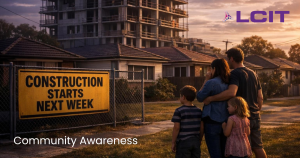
For most Liverpool families, their home is the single biggest investment of their lives. Planning decisions that affect it deserve proper, meaningful community consultation.
A Problem Closer to Home
But our concern does not stop at the State Government’s door. Because right here in Liverpool, this issue has shone a light on something that we cannot let pass without comment.
Liverpool Council staff prepared and submitted a formal response to the NSW Government’s draft Community Participation Plan before Council was ever asked to endorse it. The submission was lodged on 3 June 2026 — the deadline. Council will not be asked to formally endorse that submission until the Ordinary Meeting on 17 June 2026. Two full weeks after it was already sent.
To be clear: we are not questioning the content of the submission. From what we have read, staff raised legitimate and important concerns. And we are not criticising the staff themselves — they were working within a tight timeline that was not of their making.
What we are questioning is the process.
When Council officers submit a position to State Government on behalf of Council, elected representatives should approve that position first — not sign off on it two weeks after the fact. What happens on 17 June is not a decision. It is a formality. And dressing up a formality as a decision is not how democracy is supposed to work.
The Governance Committee met on 5 June — after the deadline, yes, but the deadline was known well in advance. The meeting was already scheduled. There was a window, perhaps a narrow one, perhaps one that required some urgency and creativity, to bring this to elected members before the submission went out. That window was not used.
Cr Harle has raised this directly with Council and will keep raising it. What we would like to see is a clear set of protocols for exactly these situations — where a State or Federal deadline lands between Council meetings — so that elected members are genuinely consulted in compressed timeframes, rather than handed a done deal and asked to nod it through.
This is not a small thing. The precedent quietly being set here is that officers can effectively define “Council’s position” on significant planning matters when a deadline makes proper process inconvenient. If we let that go without comment, we will see it again.
Why We Cannot Afford to Get This Wrong

Once a building goes up, it reshapes a neighbourhood for a generation. The time to have your say is before the crane arrives — not after.
Planning decisions are permanent. We are already seeing the effects of that right across Liverpool. Once a building goes up, it reshapes a neighbourhood for a generation. Once a consultation right is removed from the law, getting it back is an uphill battle. Once a governance precedent is set, it has a habit of repeating itself and growing.
We are at a real crossroads. The way communities across NSW engage with the planning system for the next decade or more is being decided right now. If the State Government’s reforms go through as drafted, residents will have a smaller voice in shaping their own neighbourhoods — and if councils like Liverpool do not push back hard, with the full weight of proper democratic process behind them, that smaller voice becomes the new normal.[3]
As an independent team, we have no party line to toe and no factional interests to protect. What we do have is a responsibility to the people of Liverpool — to notice when something is not right, and to say so plainly.
The planning system should work for communities. It should be open, easy to understand, and genuinely welcoming of public input. Every resident — whatever their background, whatever language they speak at home, whatever their experience with government processes — deserves a real and fair opportunity to have their say on decisions that will shape their lives.[2]
The draft Statewide Community Participation Plan takes us in the wrong direction. And Liverpool’s handling of its own response to that plan has not, on this occasion, been good enough.
The Opportunity Ahead
We are disappointed. But we have not given up.
The submission period has closed, but the plan is not yet finalised. There is still time for the NSW Government to genuinely listen to the councils, community groups, and residents who have raised serious concerns. Advocacy still matters — and it will keep mattering until this is resolved.[1]
There is still time for Liverpool Council to do better — to put in place the kind of governance processes that mean future submissions go out with the full, prior endorsement of the people elected to make those calls.
Independent voices like Mayor Carbone’s in Fairfield, and our team’s here in Liverpool, exist for moments exactly like this. To stand up. To speak plainly. To put the community first and keep putting it first, even when it is uncomfortable.
That is not something we take lightly.
Our community deserves nothing less.
Sources & References
- Fairfield City Council — Mayor Warns Residents May Lose Voice Under Proposed Planning Changes. fairfieldcity.nsw.gov.au
- Mirage News — Mayor Warns of Residents’ Voice Loss in Planning Shift, 2 June 2026. miragenews.com
- The National Tribune — Residents to Lose Their Voice Under State Government Planning Changes, 21 May 2026. nationaltribune.com.au
- Liverpool Community Independents Team — lcit.com.au